-
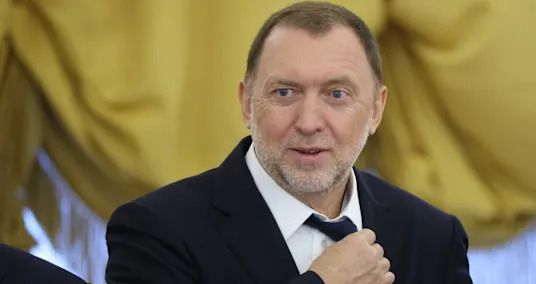
Russian tycoon Oleg Deripaska is calling for 12-hour, six-day workweeks.
-
The aluminum billionaire says longer work could help Russia speed through economic upheaval.
-
He says Russia's edge is its ability to rally and work harder in a crisis.
Russians should consider working 12-hour days, six days a week, as the country grapples with a deeper economic shift, Russian billionaire Oleg Deripaska said on Monday.
Referring to what he described as a changed global reality, Deripaska framed the country's slowing economy as more than a typical downturn driven by interest rates or monetary policy.
"This crisis is deeper. It is caused by a difficult transformation: from the global opportunities we once had to regional ones, with all sorts of restrictions," Deripaska wrote in a Telegram post.
He argued that Russia should tap into what he described as its only real resource — a "national characteristic."
"In difficult moments, we know how to pull ourselves together and work more," wrote Deripaska, the founder of Rusal, a major aluminum producer.
Longer working hours, he suggested, could help the economy adjust more quickly to changing global conditions.
"The sooner we switch to this new schedule — from 8 a.m. to 8 p.m., including Saturdays — the faster we will complete this transformation," the industrial magnate wrote.
His comments come as Russia's economy navigates a shifting landscape shaped by geopolitical tensions and changing trade flows.
Russia, a major energy exporter, has been benefiting from a surge in prices, with crude markets jolted by escalating tensions in the Middle East and disruptions to key supply routes.
Oil and gas revenues have historically accounted for more than a third of Russia's federal budget, which has been under pressure from sweeping sanctions in recent years. Official estimates showed Russia's economy grew 1% in 2025 — down sharply from 4.3% growth in 2024.
Disruptions to tanker traffic through the Strait of Hormuz — a critical global oil chokepoint — alongside a limited US sanctions waiver on some Russian shipments, have reshaped trade flows as countries scramble for supplies.
However, Deripaska had warned earlier this month that the conflict in the Middle East could weigh on global — and Russian — growth despite higher oil prices.
Benchmark crude oil futures are over 70% higher this year and trading above $100 per barrel.
Read the original article on Business Insider
LATEST POSTS
- 1
 Manual for Tracking down Spending plan Agreeable Travel Objections
- 2Benihana is 60 years old. Gen Z is lining up.
- 3Poll: By a 2-to-1 margin, Americans say Trump has done more to raise prices than lower them
- 4An Artemis 2 astronaut took a 'bath' on camera on the way to the moon. Mission Control's reaction was priceless (video)
- 5'Wuthering Heights' trailer features Margot Robbie and Jacob Elordi in a steamy forbidden romance




- Sheinelle Jones will cohost fourth hour of 'Today' with Jenna Bush Hager: Here's what to know about her
- Support Your Wellness: 20-Minute Home Exercises That Work
- I’m a doctor. Here are 10 science-backed tips to help you get healthier.
- New Jordan security fence could be done in early 2028
- South Africa pushes for $200B investment
- US FDA investigates Takeda's blood disorder drug after pediatric death
- San Francisco mayor says city in talks to bring pandas back to zoo ahead of trip to Asia
- Uzbekistan launches €9.46 billion green energy push, covering nation’s power needs
- Israel says Iran's military industry will be destroyed 'within days'